
About Ashby Family
Championing Disability Justice
Discover Ashby Family’s mission to champion disability justice, support visible and invisible disabilities, and build inclusive, connected communities.
About Ashby Family
Championing Disability Justice
Discover Ashby Family’s mission to champion disability justice, support visible and invisible disabilities, and build inclusive, connected communities.
Our Story
Rooted in Justice, Growing in Community
Group of staff and volunteers smiling outside a building entrance during a sunny day, holding bright blue star-shaped balloons.
Why We Exist, and Where We’re Headed
Mission
Vision
For Anyone Who’s Ever Felt Left Out of the System
Ashby Family LEAD & Engagement Services was born out of a deep need to increase awareness about Individuals with visible and invisible disabilities—and the truth that people who live with disabilities are whole individuals who often experience a complex intersection of needs. In too many communities, stigma still follows those who are labeled “not neurotypical,” or who are made to feel different because of how they process information, communicate, connect with others, or navigate systems to access their needs and wants.
I saw this firsthand growing up. I knew my father was different from other dads. He stood 6’5″, wore dreadlocks, and carried himself with a strong sense of Black identity. He was brilliant—excelling in the trades and profession as a master plumber, owning multiple successful businesses, building computers, photography, music, a professional band, and mastering gardening, pretty much anything that he decided he wanted to do with the same care and skill. But later in life I learned: he was severely dyslexic, and he lived with intense cycles of euphoric, excitable highs and isolating lows.
He had been diagnosed with manic depressive disorder when I was young, but I didn’t discover it until I had to hospitalize him. My father carried so much shame about the complexities of his disabilities—those that were diagnosed, those undiagnosed, and those he chose not to share, even with me, his only daughter. He needed things in a certain order, struggled with social cues, had complex relationships where you were IN and celebrated or OUT and ostracized, was socially awkward, and was impacted by complexity of colors.
Looking back, I believe that if our family had understood earlier what he was living with, it may not have changed the outcome of the illness that ended his life at 73—but it could have given us language, clarity, resources to explore, and perhaps even some relief for him.
Smiles, teamwork, and community in motion! This is what growing connections looks like—supporting one another every step of the way. Community moves us forward. Local nonprofit 5K, sharing joy, and connections that keep growing.
And I can’t help but wonder about the world my father grew up in. Would it have been safe for his mother to say her son had a learning difference and needed an assessment or support? Would it have been safe for a young Black boy in the 1940s and 1950s to receive an educational evaluation?
Would his processing differences have been recognized—or mistaken for behavioral issues? Did the public image of autism, disability, or learning differences even include children who looked like him? And how much did the labels he received—”different,” “weird,” “awkward”—inside and outside his community contribute to isolation, anxiety, depression, fear, and shame? I’ll never know all the answers for my dad. But I do know what we can do for others.
That’s why Ashby Family exists: to be a catalyst, a doorway, and a community that increases awareness of how disability can show up—whether visible or invisible—and to ensure people don’t feel pressured to “pick a category,” fit one label, or carry their experiences alone. We recognize the intersectionality of race and ethnicity, and we honor the complexity of multiple disabilities. Through education, advocacy, and affinity support groups, we aim to reduce stigma, challenge old myths, lessen isolation, and help individuals and families “call each other in.”
Most of all, we want to connect people to programs, resources, supports, and services that strengthen agency, dignity, independence, and overall wellness and quality of life. This is one window into how we pursue Disability Justice—together.
– Michele Cruse, PhD
During a casual office party, people gather in a decorated room and share a laugh as a man in a hat animatedly speaks to a woman holding a prize box, while others smile and look on near a doorway with a sign that reads ‘Your story important.’
Meet the Leaders Behind Our Mission
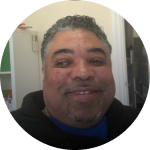
Michael Cruse, MS
Executive Director
With over 25 years of experience, Michael has walked alongside individuals with intellectual and developmental disabilities as an advocate, case manager, counselor, and mentor. His work spans youth truancy prevention, re-entry support for justice-involved individuals, and specialized counseling in addiction and mental health. Michael’s leadership is grounded in the belief that everyone has the right to dignity, opportunity, and a voice in shaping their future.
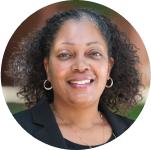
Dr. Michele Cruse
Co-Executive Director
For more than 22 years, Michele has worked to expand access for underserved individuals, including those living with intellectual and physical disabilities. Her expertise covers program development, education, housing, community engagement, and finance. She brings a strategic vision and a personal understanding of the challenges faced by people whose needs are too often overlooked.
Our Commitment to Disability Justice
We choose to center disability justice not as a trend, but as a truth. While diversity, equity, and inclusion are important, the language of DEI has been politicized and, too often, diluted. Disability justice demands we go deeper.
It means acknowledging that disability does not exist in isolation. It intersects with race, gender, poverty, and systemic inequities. It means recognizing the leadership of those most impacted. It means building systems that don’t just accommodate people, but actively remove barriers.
Our work focuses on dismantling stigma, creating safe spaces for healing, and challenging systems that keep people waiting for help that should be immediate. We believe that when disability is normalized, entire communities become stronger, more creative, and more compassionate.
Four adults, including one dressed as a slice of lemon and another in a jack-o’-lantern shirt, sit at a decorated table filled with Halloween crafts. They’re smiling and mid-conversation, with a festive atmosphere around them.
What We Stand For
Dignity
Every person is worthy of respect, autonomy, and care.
Connection
Compassion
Accountability
Empowerment
Inclusion
We remove barriers and challenge systems that exclude.
A young woman in a yellow polka-dot shirt shares a joyful high-five with another person, both smiling brightly. The moment captures warmth, encouragement, and mutual celebration.
Help Us Build a More Inclusive Tomorrow.
If you share our vision of a community where no one has to hide their disability, we invite you to be part of this work. Volunteer your time, share your expertise, or support financially. Every action moves us closer to a world where everyone belongs.
